
The Best Laptops for Local AI Work in 2026
Unified memory changed the game for running models on the go. These are the machines worth your money this year.
 Kaito Tanaka🇯🇵 Hardware EditorJun 26, 2026 7m read
The single most important spec for AI work on a laptop is no longer the GPU name — it is how much fast, unified memory you can get.
What to prioritize
Large unified-memory systems let you load surprisingly big models without a discrete GPU. For everyone else, a mobile GPU with generous VRAM is still the ceiling.
- Best all-rounder: a high-memory unified-architecture ultrabook
- Best raw power: a workstation-class machine with a top mobile GPU
- Best value: last year’s flagship at a discount
The bottom line
Buy for memory capacity first, bandwidth second, and raw compute third. That ordering will keep your machine useful far longer.
🇯🇵 Hardware Editor · Tokyo, Japan
Meticulous benchmarker. Knows the spec sheet better than the marketing.

Calculus I
by Richard Murdoch Montgomery
Limits, derivatives, integrals, and series — a first course in calculus with formal proofs, worked examples, and applications to physics and engineering.

Glioblastoma Growth Modelling
by Richard Murdoch Montgomery
Mathematical oncology meets computational neuroscience — reaction-diffusion models, imaging-driven simulations, and treatment optimisation.
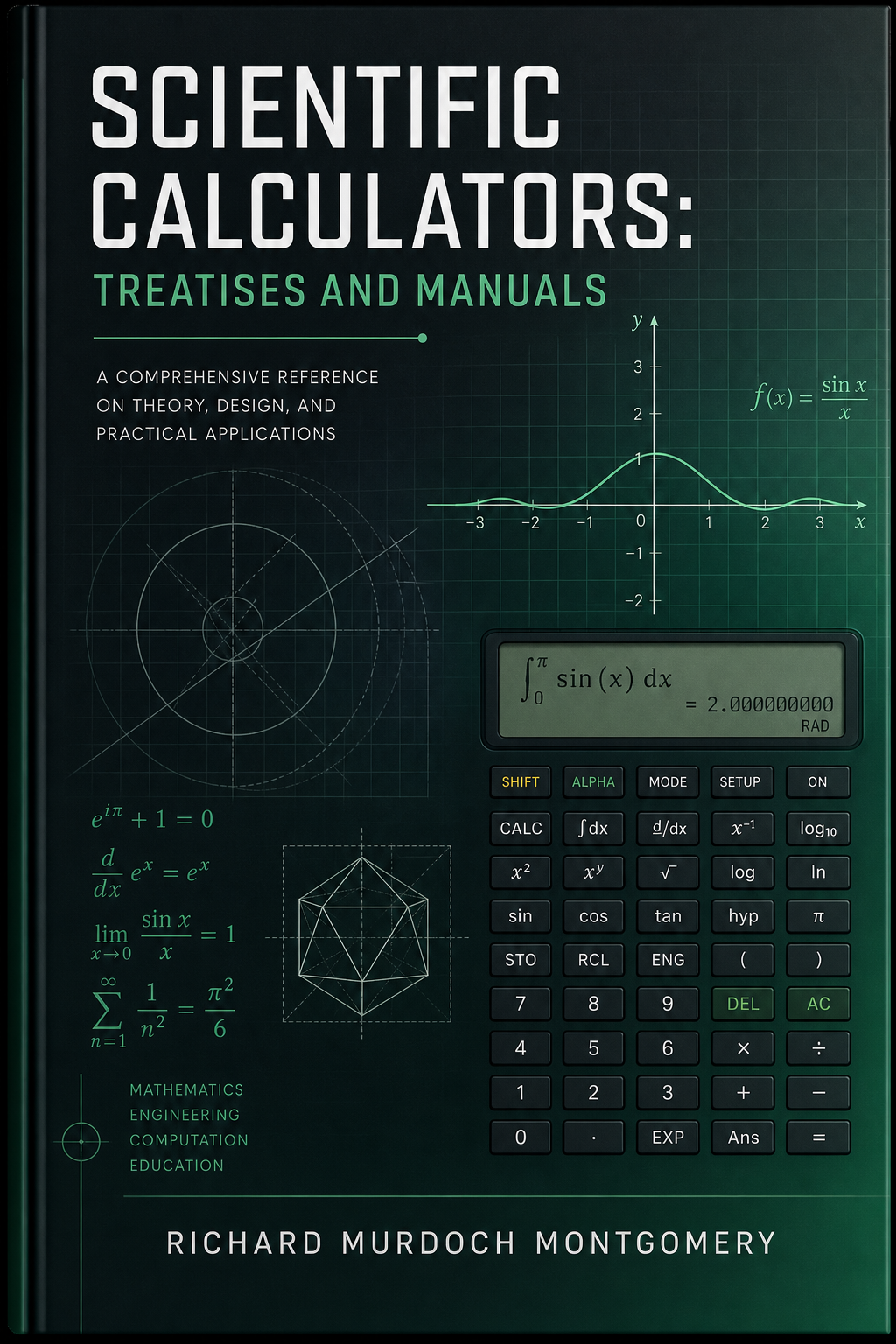
Scientific Calculators: Treatises and Manuals
by Richard Murdoch Montgomery
The definitive 15-volume series bridging user manuals and applied mathematics — from the TI-Nspire CX II CAS to financial solvers.

The TI-Nspire CX II CAS Treatise
by Richard Murdoch Montgomery
A comprehensive guide covering CAS programming, 3D graphing, calculus, linear algebra, and physics applications on the TI-Nspire.
Comments
Open discussion — no account needed. Be respectful.
More from Hardware Buying Guides
Beelink GTR9 Pro Buying Guide: Is 192GB of Unified Memory Worth $7,399?
Beelink's newly global GTR9 Pro pairs AMD's Ryzen AI Max+ PRO 495 with up to 192GB of unified LPDDR5X memory in a compact workstation. The capacity is exceptional for local LLM experimentation, but the launch pricing makes this a specialist purchase rather than an automatic desktop-GPU replacement.
Axelera AI Titania Buying Guide: What to Buy Now and What to Prepare For
Axelera AI’s Titania targets high-capacity data-center inference in an air-cooled reference platform, but production is not expected until Q3 2027. This guide explains who should prepare for Titania, who should wait, and when the available NXP Ara240 is a more practical edge-development option.
AMD’s 6th Gen EPYC Is Here: How to Buy the Right AI Host Server
AMD’s 6th Gen EPYC SP7 platform is now shipping, bringing Zen 6, up to 256 cores, 16 memory channels and PCIe 6.0 to AI host servers. This guide explains who should buy in now, which workloads benefit, and why the flagship chip is rarely the sensible first choice.